FROM THE ART OF THE MOVIES JOURNAL
Holy Anniversaries, Batman! Sixty years after Batmania began, why does Adam West's Batman work better than ever?

The very first Playboy Club, at 116 East Walton Street in Chicago, was a predictably hedonistic affair in its heyday. Windy City native Hugh Hefner opened the controversial joint on 29th February 1960 and, by the following year, it had become the busiest night spot in the world. People from all over flocked in their thousands to indulge in its glitzy decor, glamorous cocktails, and lots of attractive young servers dressed in their signature revealing Playboy Bunny outfits.
Yet Playboy also played a surprising part in the story of Batman.
In 1964, Hefner screened all 15 chapters of Columbia’s old 1943 Batman serial at the Playboy Mansion in Chicago. Starring Lewis Wilson as Bruce Wayne and Douglas Croft as his youthful sidekick Dick Grayson, the creaky old cliffhanger proved an unlikely hit with the fashionable crowd. The event attracted plenty of attention and Columbia subsequently re-released the serial theatrically in 1965 as An Evening with Batman and Robin. Around the same period, the Chicago Playboy Club and its theatre were also screening Batman chapters to audiences who came along to drink, smoke, cheer their heroes and boo the bad guys.

One name that crops up repeatedly in accounts of what happened next is Yale Udoff, an executive at ABC Network and a fan of Bill Finger and Bob Kane’s shadowy DC Comics superhero since he was a kid. The familiar version of the story has Udoff witnessing the enthusiastic Playboy reaction and realising that Batman and Robin were ripe for reinvention.
The actual chronology appears to be a little less tidy than that. What we do know is that Udoff championed the idea of a prime-time Batman series at ABC. Whether Playboy directly gave him the idea or simply demonstrated something already beginning to stir is harder to pin down. Either way, those screenings showed that a character created for comic books in 1939 could suddenly work as something else entirely: knowingly old-fashioned, colourful, ridiculous and very funny.
ABC took the chance. On 12th January 1966, Batman arrived on American television.
Sixty years later, it is difficult to imagine quite what followed.

My first encounter with the 1960s Batman TV series was as a hate-watch when I was a kid. I rarely missed an episode when I first encountered it on British telly in the late ‘80s, but it just made me angry. I guess it landed at just an age when I was starting to view things more critically, but I wasn’t yet familiar with concepts such as camp, spoof, cult, or deadpan – all of which are key to the long-standing appeal of the show.
What I didn’t understand was that Batman was pitched on two levels from the beginning: lots of colourful villains, fights, and cunning plans that the kids could enjoy, and a strain of innuendo and subversive humour that their parents could tune into. It didn’t happen by accident. The show’s producer, William Dozier, had no nostalgic love for either the DC Comics or the ‘40s serial, and he felt the only way it could be done successfully was by leaning into campy pop-art excess.

That approach only works if Batman and Robin are effectively the straight men of their own adventures, two squares whose frequent pitstops for po-faced moral lessons are offset by the freakish chaos created by a rogue’s gallery of supervillains. In a sense, it was the perfect Batman for its era: The Dynamic Duo representing traditional values at a time when the counterculture movement in America promised to upend the norm. And the crucial thing is, while we’re often laughing at the Caped Crusader and Boy Wonder, the performances of Adam West and Burt Ward are so endearing that we’re still rooting for them anyway.
The actors needed to tread a fine line between earnest and knowing, and Dozier found the perfect pair. Adam West had made a modest career for himself in film and TV, but it was his performance spoofing James Bond in a Nestlé Quik commercial that helped convince Dozier that West had the right approach.
Auditioning opposite him was a precocious newcomer called Burt Gervis, whose surname would be changed to Ward when he landed the role. They were up against Lyle Waggoner and Peter Deyell – check out the comparative screen tests to see how that might’ve played out!
The Batman TV series looks rather shonky by today’s standards, but it was pretty big-budget for the time. A lot was at stake, and ABC feared the worst when test screenings didn’t score well. However, with its regular schedule hardly tearing up any trees, the network backed the Caped Crusader with a heavy marketing campaign ahead of his debut. The risk paid off as the show seized a huge audience with the first two-parter pitting our intrepid crime fighters against Frank Gorshin’s wonderful Riddler.
Concerns that viewers wouldn’t get the show’s humour disappeared almost immediately as Batman became the hottest thing on TV. The masterstroke was dividing the originally conceived hour-long adventures into two half-hour episodes, paying off a cliffhanger with the resolution (“Same Bat-time, same Bat-channel!”) on the following night. The format created an incredible amount of buzz as viewers tried to figure out how the Dynamic Duo would escape a fiendish deathtrap or thwart the latest evil masterplan, creating water-cooler moments well before the term became popular in the 1990s.
It also helped that Dozier used his showbiz connections to draft in serious talent to play the villains from the first season onwards. Apart from Gorshin’s Emmy-nominated Riddler, which he based on Richard Widmark’s deranged gangster in Kiss of Death, Dozier also hired Hollywood veteran Burgess Meredith, then well known for his memorable appearances on The Twilight Zone, to play the cackling Penguin; Cesar Romero for the Joker, who famously refused to shave his beloved moustache – the makeup artists just painted over it instead; Oscar winners and nominees such as George Sanders (Mr. Freeze), Anne Baxter (Zelda the Great), and Victor Buono (King Tut); and Julie Newmar as perhaps the greatest screen Catwoman.

Big stars weren’t just queuing up to play the villains on the show. One of my favourite bits was always the bat-climb sequences, a hilariously lo-fi effect achieved by fixing the camera sideways on a horizontal wall set as Batman and Robin scaled a building with their bat-rope, only to be briefly interrupted by a celebrity “citizen” popping their head out of a window. Jerry Lewis was the first, and other famous faces of the era including Sammy Davis Jr., Werner Klemperer (Colonel Klink in Hogan’s Heroes), Ted Cassidy (Lurch from The Addams Family), and Edward G. Robinson all greeted the crime fighters in such fashion.
One of the most interesting guest slots was a crossover with another superhero TV show as the Green Hornet (Van Williams) and Kato (Bruce Lee) briefly encroached on the Dynamic Duo’s turf, to Batman’s mild annoyance. You can see all the Bat-Climb cameos here:
Despite the initial trepidation around how audiences would respond, people just got it. Unlike many series nowadays that take a few episodes, or even a few seasons, to fully bed in, Batman knew exactly what it was from moment one.
All the tropes that remain cultural shorthand 60 years later were there almost from the start. Each episode opened with an animated credit sequence and that ridiculously catchy theme song before the glowing red Batphone summoned Bruce and Dick to another emergency. They’d slide down the Batpoles to the Batcave, somehow changing into their outfits along the way, and fire up the groovy nuclear-powered convertible that was the Batmobile.
Once on the case, they’d usually fathom out clues with some unlikely leaps of logic as Robin exclaimed “Holy something-or-other!”, then head off to save the day with the help of some improbable and handily-labelled Bat-gadgets. Meanwhile, the supervillain would usually be romping around a lair shot at a crazy Dutch angle, giving the hideout its own surreal feel. Comic-style action bubbles – “Pow!”, “Zam!”, “Biff!” – popped up onscreen as the Dynamic Duo fought off armies (well, handfuls) of goons before victory was finally declared.
With the more-ish format in place and hooking audiences from the get-go, the commercial machine quickly followed. Batmania swept the country and made instant superstars of Adam West and Burt Ward, who gamely attended as many public events as they could fit into their diaries to the delight of Bat-fans. ABC even squeezed a controversial fourth minute of commercials into Batman from its first season, a measure of just how valuable the network believed its new phenomenon could become.
1966 also saw the theatrical release of Batman, a feature-length movie originally intended to introduce the characters to the public and promote the show abroad. But as the first series was moved forward in the TV schedules, the film instead arrived in the gap before the second season. The success of the show gave the producers scope to splash extra cash on props and sets, also debuting the Batboat and the Batcopter.

The movie’s advertising is a lovely snapshot of just how completely Batmania had taken hold. Here was Batman no longer being sold merely as a superhero, but as the centre of an entire riotously colourful world: Robin alongside him and the Joker, Penguin, Riddler and Catwoman all competing for attention. Seen today on an original theatrical poster, that imagery feels almost like the whole 1966 phenomenon compressed onto one sheet of paper.
The Batman movie itself has plenty to enjoy, pitting our fearless crime fighters against the combined forces of the Joker, Penguin, Riddler, and Catwoman – played by Lee Meriwether because Newmar had other commitments. It features some of the most iconic moments to ever come out of the ‘60s phenomenon, such as Batman dangling from the Batcopter with a shark munching on his leg, and an extended comic sequence where the Caped Crusader tries to dispose of a fizzing bomb but gets thwarted at every turn.
It’s ludicrous, wholesome fun and it’s great to have all four primary villains playing off each other, but the format feels pretty thin stretched out to over 90 minutes. It rinses and repeats the usual dastardly plans and narrow escapes without many dramatic beats in between, perhaps foreshadowing the demise of the show by exposing its one-note nature.
Back on terrestrial TV, the second season of Batman amped up the outlandish plots and deathtraps and introduced more big stars as supervillains: legendary Hollywood director Otto Preminger and Eli Wallach took turns playing Mr. Freeze; Vincent Price camped it up as Egghead; Shelley Winters went all-in as mob mama Ma Parker; and John Astin of The Addams Family fame replaced Frank Gorshin as Riddler.

Come the third season, however, audiences began to tire of the show and viewing figures dropped off steadily. Batgirl (Yvonne Craig) was introduced to add a female hero and rejuvenate interest, while Eartha Kitt brought a very different, sharper energy to Catwoman. For me, though, Julie Newmar remained almost impossible to dislodge as the definitive version. More damagingly, the decline in ratings meant a smaller budget and the episodes looked increasingly threadbare. The show was also reduced to just one time slot per week, losing the crucial cliffhanger format that had helped make it such a talking point.
With a waning viewership, ABC cancelled Batman towards the end of the third season. NBC briefly toyed with picking it up, but backed out again when it was revealed that the expensive sets for the show had already been destroyed. And just like that, Batmania fizzled out almost as quickly as it began.

In the aftermath of the TV series, many comic fans and critics felt that the show had turned Batman into a joke and, for several years afterwards, the Caped Crusader became something of a campy punchline. It also had repercussions for West and Ward, who had become inseparable from the roles that made them mega-famous. Both found themselves heavily typecast afterwards.
But while the series flamed out after such a bright and brilliant start, it also did something more important for Batman the character: it kept him firmly in the public consciousness at a point when Gotham’s finest had long been overshadowed by Superman.
As the comics moved into the ‘70s, creators such as Dennis O’Neil and Neal Adams helped steer Batman back towards the noir-ish detective roots of the ‘30s and ‘40s. Stories and characters became darker and more psychologically complex and, come the ‘80s, graphic novelists like Frank Miller (The Dark Knight Returns) and Alan Moore (The Killing Joke) took him into even more adult and disturbing territories.
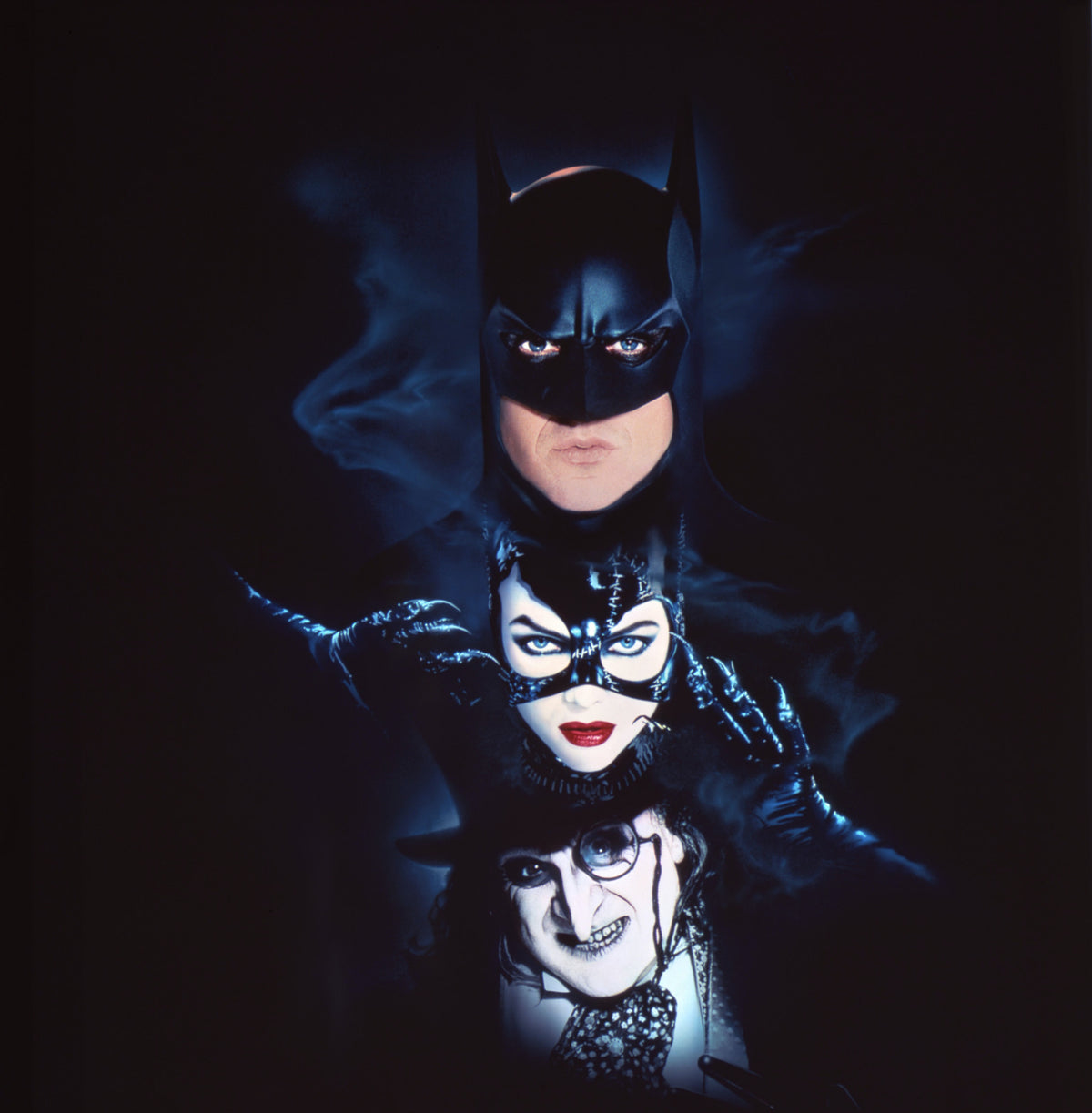
That trajectory set a course for Batman becoming arguably the most popular superhero on the planet, culminating spectacularly with Tim Burton’s Batman in 1989. The film was not only a massive box office success, it was also a cultural moment every bit as extraordinary as the TV series at the height of its popularity.
And the new ‘80s Batmania also had an unexpected side effect for Batman ’66. Rather than erasing it from the collective consciousness, it sparked a revival of affection and interest in the old show through re-runs on both sides of the Atlantic – that’s where I came in, watching it with my parents on British telly and getting angry about how silly it all was.
It was also around this time that West and Ward increasingly embraced their enduring connection with the series, delighting fans old and new at comic conventions, receiving rapturous applause on television appearances, and poking fun at their screen personae in shows like Family Guy and The Simpsons. West in particular, ever self-deprecating about his most famous role, became a familiar presence again through many cameos as himself while also lending his distinctive voice to everything from animated series and video games to commercials and even the Batman ’66 pinball machine.
Burt Ward is still with us but West passed away in 2017, provoking an outpouring of love for the actor and the Batman TV show. One of the most touching tributes I saw – I wish I could credit the artist – depicted his Caped Crusader bat-climbing his way through the clouds up to heaven.
Around the same time, I saw another post – again, I can’t find the source – claiming:
“Part of growing up is realising Adam West was the best Batman.”
I can’t disagree with that at all.
Since West’s heyday in the cape, we’ve had Michael Keaton, Val Kilmer, George Clooney, Christian Bale, Ben Affleck, and Robert Pattinson starring as live-action versions of Batman. They’re all great actors and each one puts his own spin on the character, but there is often the nagging doubt that they’re nowhere near as charismatic as the villains.
That wasn’t the case with West’s Batman.

With his debonair charm and sly twinkle that let you know he was in on the joke without ever breaking it, he was the centre of the show and just as funny and entertaining as the villains he faced every episode.
It took me a long time to understand what he was doing.
Sixty years after Batman first landed on American television, perhaps that is the greatest achievement of the whole candy-coloured, ludicrous enterprise. The joke has survived, but so has Batman.
As modern adaptations continue to favour darker, grittier interpretations, here’s hoping that one day the pendulum swings back in the other direction and we get a Caped Crusader every bit as colourful, charming and wonderfully straight-faced as Adam West himself.